· Ken Luzu · Book · 7 min read
Taking CONTROL of your life
Stop blaming outside circumstances and take real control of the next step that will lead you to bigger goals.

CONTROL, by Freddy Vega, CEO of Platzi, is a guide that explains how to reach the goals you have in life. Changing the way you think isn’t enough; the book is a call to action to build wealth and master your own life.
Throughout the book, the chapters move from the most basic habits all the way to structuring your daily routine.
The fundamentals of living well
Sleep 7 to 8 hours, exercise, cut down on sugar and connect with people. Simple and heard a thousand times, but doing this is always the foundation for starting to take control.
A 2014 Stanford study showed that walking increases creativity by 60%. Having the discipline to wake up at the same time no matter the day, eating well, socializing and exercising teaches you that you’re capable of doing hard things, and it helps your mental health. Action reduces anxiety.
It’s impossible to control everything: you have to accept that there are things you can’t control (government, laws, the weather, etc.), but focus on what you can. And if at some point you lose control of what is within your reach, come back to these 4 pillars:
✨ Eat, sleep, socialize and move ✨
Extra tip
Steve Jobs was known for his
walking meetings. He walked around the Palo Alto grounds at Apple’s offices with his employees to come up with innovative ideas.
The value of your time
Learn the value of your time means rethinking things like how much that time is worth when you decide to wait in a long line just to save the extra fee.
How much would you pay to spend 1 hour with the pet you no longer have? How much to spend 1 hour with the person you love most? How much for 1 extra hour of sleep? The big experience companies understand this very well, and that’s why going to Disney is so expensive, or why business class on a flight where you can actually sleep costs what it costs.
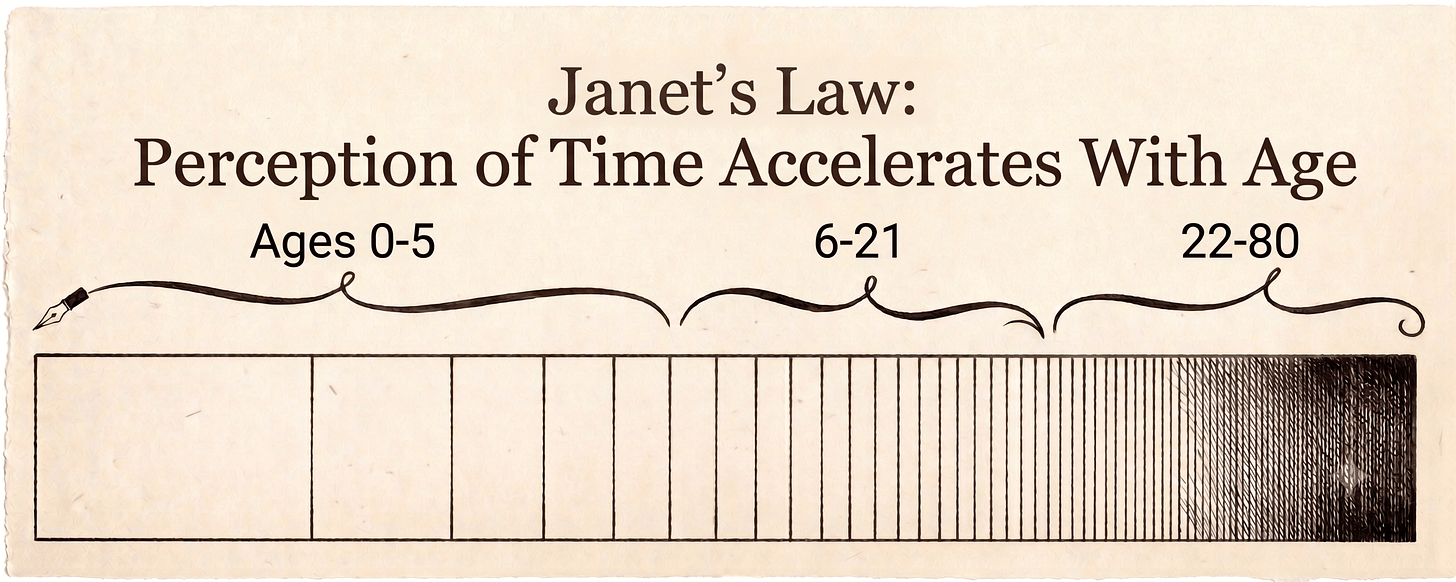
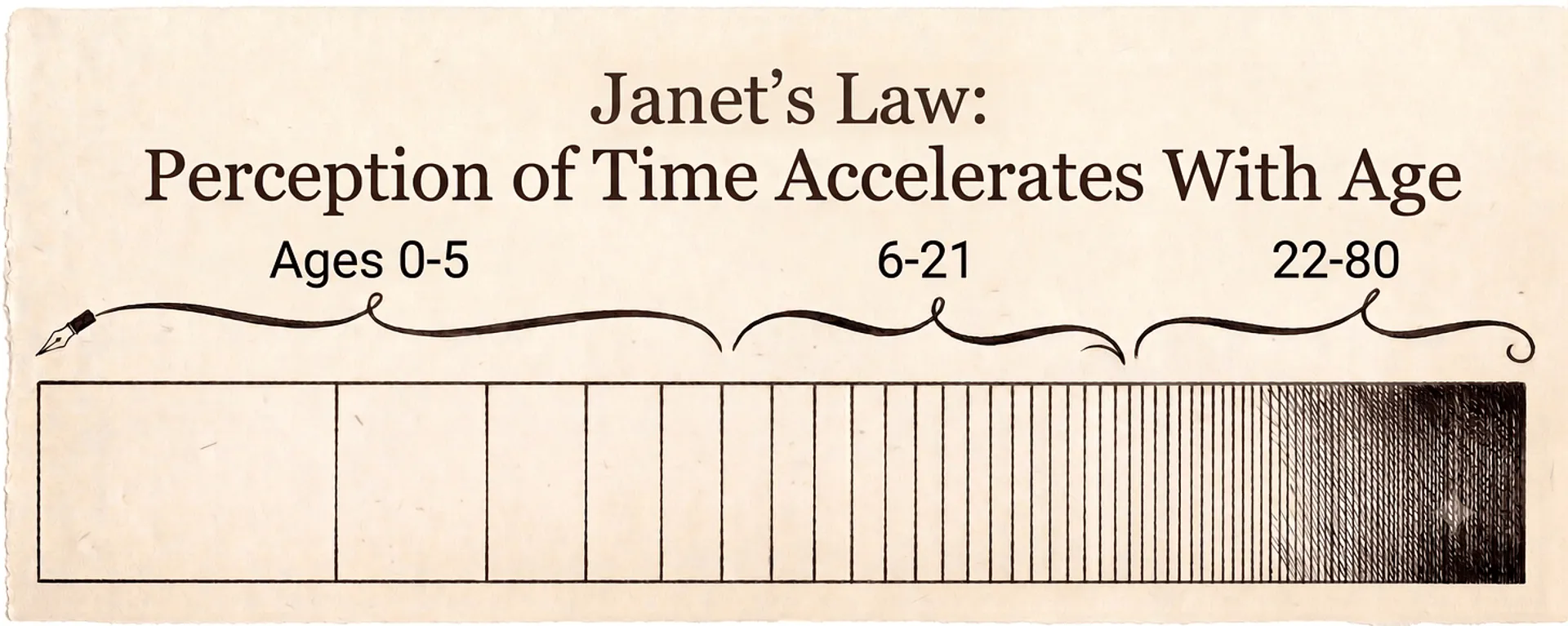
At 5 years old, one year of life represents 20% of your life; at 50, only 2%. That’s because your mind erases monotonous memories. As a child you were living new experiences practically every day, so your brain stored those memories very vividly. But as time passes and you become an adult with a fixed routine, your brain stops recording those memories. A Tuesday in February becomes the same as a Tuesday in April, so your brain doesn’t store that day.
Value your time properly and learn to take risks: in most cases, the worst that can happen is nothing.
Extra tip
Janet’s law explains why, as an adult, the years feel like they fly by while as a kid they didn’t. How do you change that perspective? By living new experiences. If your life is monotonous, your mind erases memories, giving you the sense that time flies without leaving a trace.
Human capital and family
The people who will take you from zero to a hundred are not the same ones who will take you from a hundred to a thousand.
It seems obvious to think that your closest friends are the ones who will help you land most of your opportunities, but it turns out that’s not entirely true. Your medium or weak friendship ties are the ones that will help you the most in finding a better job. There’s a simple explanation: your closest friends have the same information you do, and they move in a very similar environment; so it’s logical that people with a less close tie have a landscape that’s more unexplored than yours.
The best opportunities don’t come from your closest friends. You have to look for diversity in people, which is the same as being surrounded by different perspectives that will lead you to make better decisions and sharpen the objectivity of your own thinking.
That said, there’s something more valuable than simply having good contacts: your family. If you read stories to your child when they’re 4 years old, they’ll arrive at school knowing between 300 thousand and 1 million more words than the rest of the kids.
Investing in the education of the youngest members of your family is one of the foundations for powering the engine of multigenerational wealth. That invested money can return around 15% over the course of a lifetime.
Multigenerational wealth lies not only in education and upbringing, but in family unity, marrying between families with similar values, and selfishly helping every one of its members. Rich families become rich again even if you take everything away from them, thanks to this.
Remember, helping others makes you happier. It activates dopamine, serotonin, oxytocin and endorphins. This is more effective than any drug, exercise or romantic activity. Donating your time to a worthy cause is equivalent to the benefits of quitting smoking.
Extra tip
Around 30% of family businesses survive into the second generation, and barely 15% make it to the third. Future generations who grew up as heirs see the business as a source of income or status, not as a project of survival or personal passion.
Grow at work
More than half of your waking time is spent at your job or commuting to it. Making the most of the time within your workday to learn skills is without a doubt one of the best plans you can make.
It sounds strange, but get paid to learn. Understand how the company you work for makes money. Ask how they measure success and understand the most important day-to-day metric. Choose what you want to learn and identify how to apply it to the business line. Pitch it and make it happen.
Innovating for your company in secret could doom your career. In the software world this is known as “Shadow IT”. Operationally speaking, indispensable people don’t grow. To grow, you need to be “replaceable”, since a promotion happens when there’s a successor. It’s only worth being indispensable for your judgment and impact, not for being the only one who knows how to run a process.
There’s a metric that identifies how risky it is for a project to stall or be cancelled depending on whether one or more people leave the team. The “bus factor” indicator measures the people who are indispensable to the project and become a single point of failure. A bus factor of 1 means there’s a single person who knows the system, and it becomes a danger to the organization for that knowledge to be concentrated in one person.
Extra tip
The term “bus factor” became popular in the software development world, and its name refers to: what would happen if a bus ran over the most important person on the project? It’s also known as the “lottery factor”, in case someone on the team wins the lottery and decides never to work again.
Conclusions
Taking control of your life doesn’t depend on a single drastic change, but on the sum of small daily decisions. Sleeping well, moving, eating well and surrounding yourself with diverse people gives you the physical and mental foundation to act. Understanding the true value of your time helps you stop wasting it on what doesn’t matter. Investing in your family and in broader ties multiplies your opportunities beyond what you could achieve alone. And using your job as a space for constant learning makes sure you keep growing instead of stagnating.
None of these pillars works in isolation: the discipline you gain by taking care of your body is the same one you need to take risks with your time, to get closer to different people, or to propose something new at work. Real control isn’t controlling everything that happens around you, but deciding, day by day, how you respond to what you can change.
”Your next action is always in your control. Relax. Mathematically, you’ll be fine.”